Discover history with The Brontos
Informed dinosaurs know their rights!
Learn about the first ten amendments to the U.S. Constitution with vocabulary worksheets, puzzles, and thoughtful questions. Each lesson comes with a “Rights Explorer” achievement certificate.
Sample Worksheets
What is the Bill of Rights?
The Bill of Rights is the first ten amendments to the U.S. Constitution, ratified in 1791. These amendments protect freedoms, set limits on government, and establish safeguards for people facing legal proceedings.
Lessons to download, print and use
Amendment 1
Freedoms of expression and religion
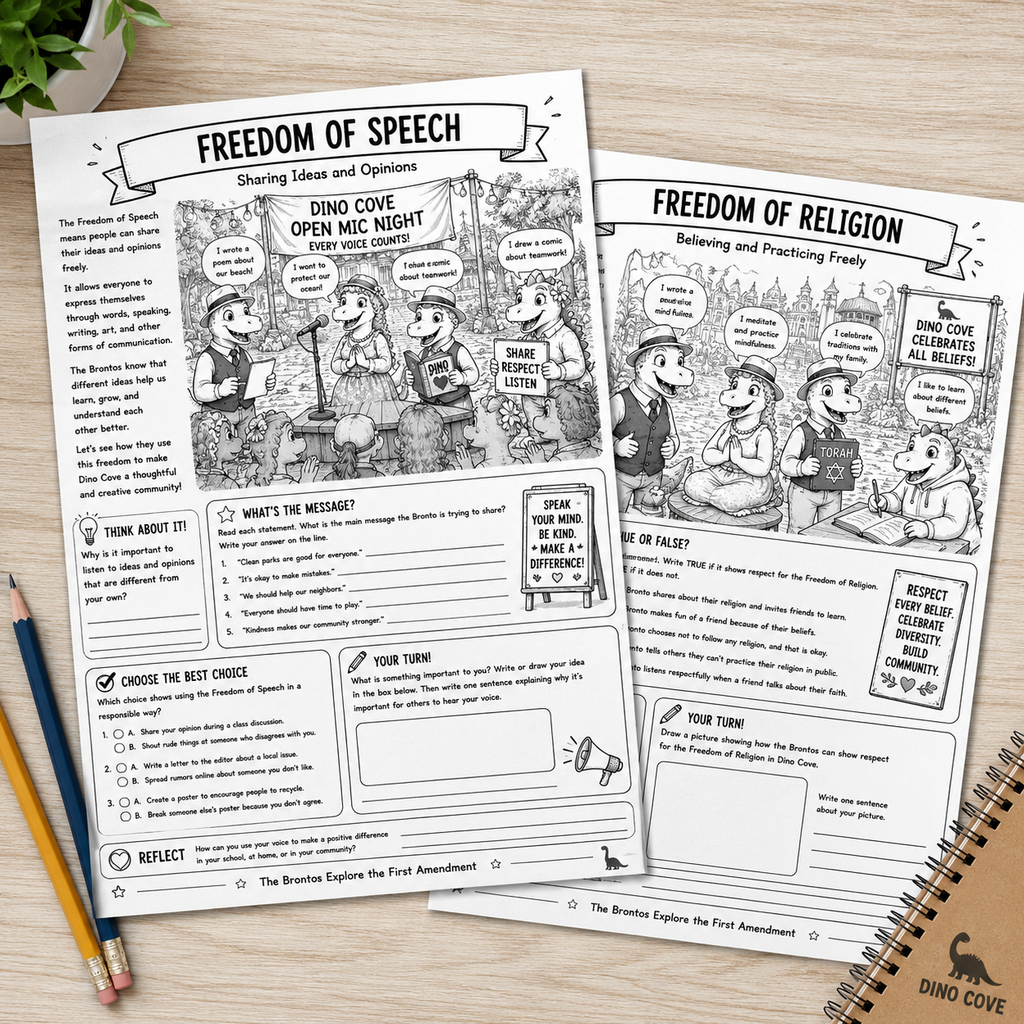
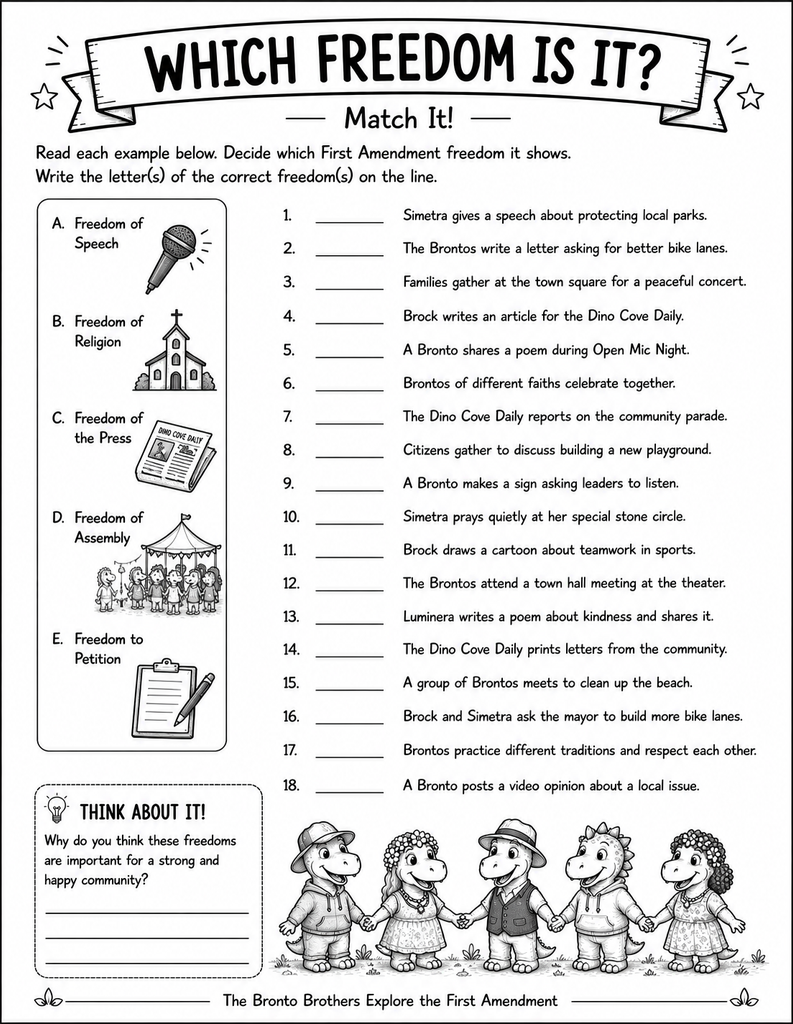
Protects religion, speech, the press, peaceful assembly, and petitioning government.
Amendment 2
The right to keep and bear arms
Protects keeping and bearing arms; its text also refers to a well-regulated militia.
Amendment 3
Soldiers and private homes
Requires owner consent to house soldiers in peacetime; wartime quartering must follow law.
Amendment 4
Searches and seizures
Guards against unreasonable searches and seizures and sets requirements for warrants.
Amendment 5
Legal safeguards
Addresses grand juries, double jeopardy, self-incrimination, due process, and compensation for property taken for public use.
Amendment 6
Rights in criminal trials
Protects speedy, public trials, impartial juries, notice of charges, witness rights, and legal counsel.
Amendment 7
Juries in civil cases
Preserves jury trials in certain civil cases and limits reexamination of jury findings.
Amendment 8
Limits on punishment
Forbids excessive bail, excessive fines, and cruel and unusual punishment.
Amendment 9
Rights beyond the list
Recognizes that people retain rights beyond those specifically listed in the Constitution.
Amendment 10
Reserved powers
Reserves powers not granted to the federal government, nor prohibited to states, to states or the people.

These are brief introductions in kid-friendly terms. Read the complete Bill of Rights at the National Archives.